


Do You Really Need a Full Redesign to Improve Your SaaS Conversion Rate? Here’s the Truth
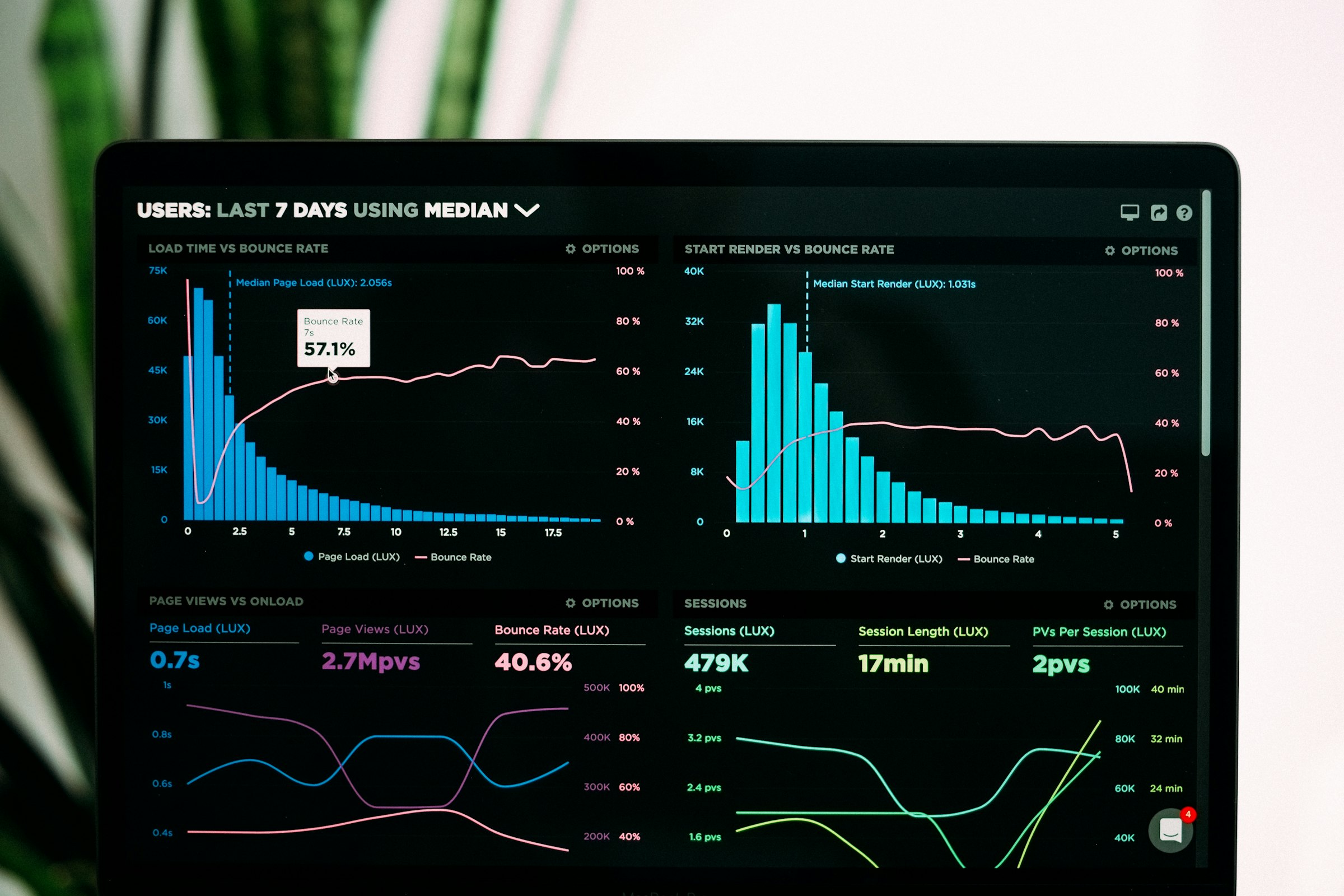
You’re spending between $4,000 and $10,000 every single month on LinkedIn ads, Google Search, and cold outreach. The traffic is hitting the site, the "sessions" metric in Google Analytics is climbing, but your Slack notifications for new signups? They’re suspiciously quiet.
Naturally, you look at your landing page. You’ve had it for eighteen months. The shadows on the buttons look a bit 2022. The copy feels... fine, but maybe not "dynamic" enough. You think to yourself, “We need a full redesign. A fresh start. Something that looks like a Series D startup.”
Stop right there.
Before you commit $20,000 and three months of your life to a design agency that prioritises "vibes" over "conversions," let’s talk about the truth. Most B2B SaaS companies don't need a full redesign to fix their conversion rate. In fact, throwing out your current site might be the riskiest move you could make.
The Seductive Trap of the Full Redesign
Why is a redesign the first thing founders think of? Because it’s the "sexy stuff." It feels like progress. You get to look at mood boards, choose new fonts, and see your product in high-fidelity mockups. It’s an easy project to start, but a difficult one to finish with an actual ROI.
But here is the reality of the "Total Overhaul" approach:
The Bottom Line: You shouldn't be looking for a "fresh look." You should be looking for a Translation Layer. You don't need a new car; you need to fix the engine that's already under the bonnet.
The "Translation Problem": Why Your Site Isn't Converting
If you’re a B2B SaaS founder, you are too close to your product. You live in the features. You know the backend architecture. You know why your API is 20% faster than the competitor’s. You see the world through the lens of your product's capabilities.
When you write your website copy, you’re writing for yourself. This leads to what we call the Translation Problem.
The Translation Problem occurs when the expert knowledge of the founder obscures the clear messaging required by a first-time visitor. A visitor lands on your site with a specific pain point. They don't care about your "AI-powered holistic ecosystem." They want to know: "Can this tool help me automate my monthly reporting so I can go home at 5 PM?"
Pro Tip: If a five-year-old can't understand what your software does within five seconds of looking at your hero section, you don't have a design problem: you have a messaging problem. You are asking your prospects to do too much "mental lifting" to figure out how you help them.
Identifying the Gap
A full redesign won't fix this if you're just putting the same confusing "Founder speak" into a prettier font. You need to bridge the gap between your technical excellence and the user's desired outcome. Design should support the message, not hide it.
Logic Over Aesthetics: Why Gradients Don’t Sell Software
Do you really think a CTO at a mid-market firm is going to refuse your solution because your primary colour isn't "on-trend" for 2026? Unlikely. B2B buyers are looking for tools that solve business problems, mitigate risk, and save money.
They care about reduced friction and perceived value. High-performing SaaS companies validate decisions with data rather than intuition. Take Dropbox, for example. In their early days, they famously increased signups by 10% simply by changing their headline from "Storage" to "Simplicity." No redesign. No new brand identity. Just one word that resonated better with the user's mental model.
Instead of a redesign, look at high-leverage, low-cost changes. These are the "quick wins" that move the needle without requiring a dev sprint. We call this "Evolutionary Design" rather than "Revolutionary Design."
High-Leverage Tweaks to Try First:
The Diagnostic Phase: Pivot vs. Polish
Before you burn the house down, you need to know where the leaks are. A full redesign is a systemic solution, but you might have an isolated problem. How do you tell the difference?
When to Polish (Incremental Tweaks):
When to Pivot (Full Redesign):
If you aren't in the "Pivot" category, you are likely wasting money on a redesign when you should be investing in conversion rate optimisation.
The Risks of Starting from Scratch
When you perform a full redesign, you are essentially gambling with your existing conversion rate. Even if your current site is underperforming, it has a baseline. You know that for every 1,000 visitors, X% sign up.
When you launch a "Version 2.0," you often see a "Redesign Dip." This isn't just a myth; it's a measurable phenomenon.
Instead of burning the house down, we recommend an Incremental Optimisation strategy. Fix the leaks in the funnel before you try to build a new funnel.
Problem-Solution-Action: Your Growth Roadmap
If you’re currently spending £5k+ on ads, your priority shouldn't be "looking pretty." It should be "converting efficiently." Here is how you should approach your site right now:
The Problem: Visitors arrive, get confused by the technical jargon (The Translation Problem), and bounce because they don't see the immediate value. They feel your product is "too complex" or "not for them."
The Solution: Focus on messaging clarity and social proof over visual flair. Align your site with current CRO trends that favour transparency, speed, and immediate utility.
The Action:
Stop Guessing, Start Testing
The truth is, you don't know if you need a redesign because you're too close to the project. You see the site every day. You know where every link goes. Your visitors don't. You need an objective, expert eye to tell you where the "leaks" are.
At Conversion Haus, we specialise in helping B2B SaaS founders stop wasting their ad spend. We don't believe in redesigns for the sake of redesigns. We believe in ROI. We believe that a slightly "ugly" page that converts at 5% is infinitely better than a "beautiful" page that converts at 1%.
If you want to know exactly why your current page isn't converting without spending $20k on a new site, we have two ways to help you right now:
Ready to see the truth about your site?
Request your Audit here.
Don't let a "pretty" design get in the way of a profitable business. Let's fix the messaging, bridge the translation gap, and start turning those expensive clicks into loyal customers. We’re here to be your long-term growth partner, one optimisation at a time.
The Bottom Line: A redesign is a project; optimisation is a process. Choose the process that leads to profit.
Enjoyed this insight? Check out our Insights page for more strategies on scaling your SaaS, or contact us to discuss your specific conversion challenges.

Stop wasting money on a leaking funnel.
Conversion audits for b2b saas
find & fix conversion leaks
CONVERSION HAUS
Sydney
.png)


